
Piering & Underpinning Systems Throughout The Kansas City Metro
Permanent Structural Support for Settling Foundations—Engineered Right, Installed Clean.
What Are Piering & Underpinning Systems?
When your home’s foundation begins to settle, sink, or shift, piering and underpinning systems offer a permanent way to transfer your home’s weight to stable soil or bedrock—restoring structural integrity from the ground up.
At ABI Corporation, we’ve been installing professional-grade pier systems across Missouri and Kansas since 1969. Whether you’re dealing with minor foundation cracks or major structural settlement, our engineer-approved, code-compliant solutions are designed to:
- Stop settlement permanently
- Lift sunken sections of your foundation
- Prevent further cracking or separation
- Add long-term resale and structural value
Why Foundations Settle in the Kansas City Region
The Midwest is home to expansive clay soils that expand when wet and shrink during droughts, causing unstable shifting beneath your home’s footings.
Additional local causes include:
- Poor soil compaction during construction
- Erosion from improper drainage
- Soil “slip zones” from tree root systems or decaying organic material
- Aging structures without modern footings
- Heavy additions placed on unstable fill
These conditions result in uneven support, which causes your home to sink, slope, or crack—especially in corner areas and load-bearing points.
Signs You May Need Piering or Underpinning
Here’s what to look for if your home may be settling:
Cracks in exterior bricks or interior drywall
Uneven or sloping floors
Doors/windows that stick or won’t latch
Gaps between walls and ceiling or floors
Chimneys separating from the home
Cracks in foundation slab or crawlspace piers
Garage floors sinking or pulling from walls
These are not cosmetic. They’re
warning signs of active foundation settlement and should be addressed immediately.
Steel Piering & Support Systems
Steel Push Piers
Best For: Heavy structures with deep load-bearing layers
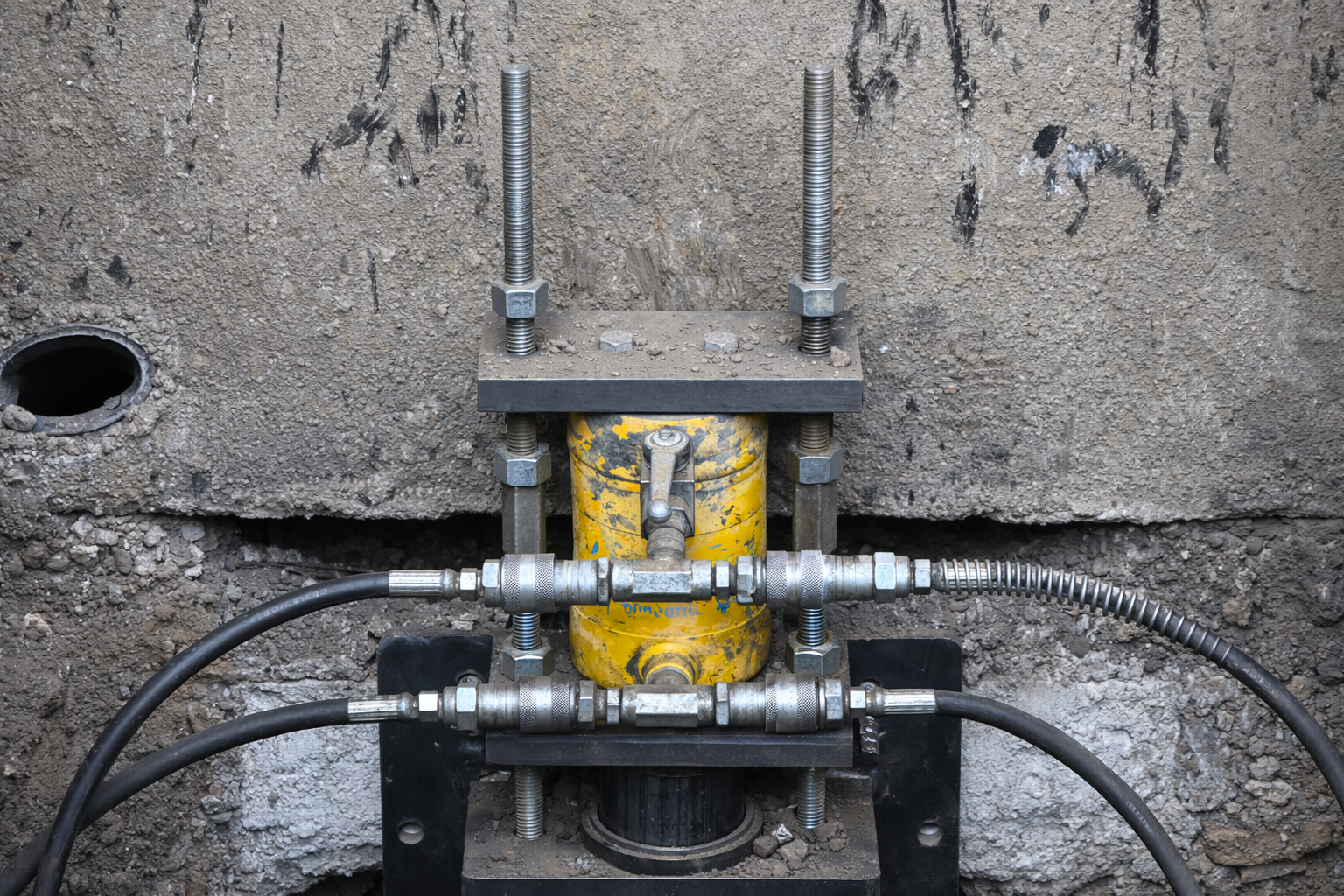
Push piers are galvanized steel pipes hydraulically driven deep into the earth beneath your foundation until they reach bedrock or firm, load-bearing strata.
Once resistance is met, the home is lifted and leveled using the piers, then bracketed securely to remain stable.
Key Features:
- Driven
vertically using hydraulic rams
- Installed beneath existing footings
- Transfer structure weight to deep, stable soils
- Ideal for larger or older homes
- Quiet, clean installation with minimal disruption
Advantages:
- Can be driven
deeper than helical piers
- Excellent for deep settlement zones
- Suitable for nearly all soil types
- Long-term, load-bearing stability
- Engineered lifting control
Helical Piers
Best For: Lighter structures or fill-soil conditions
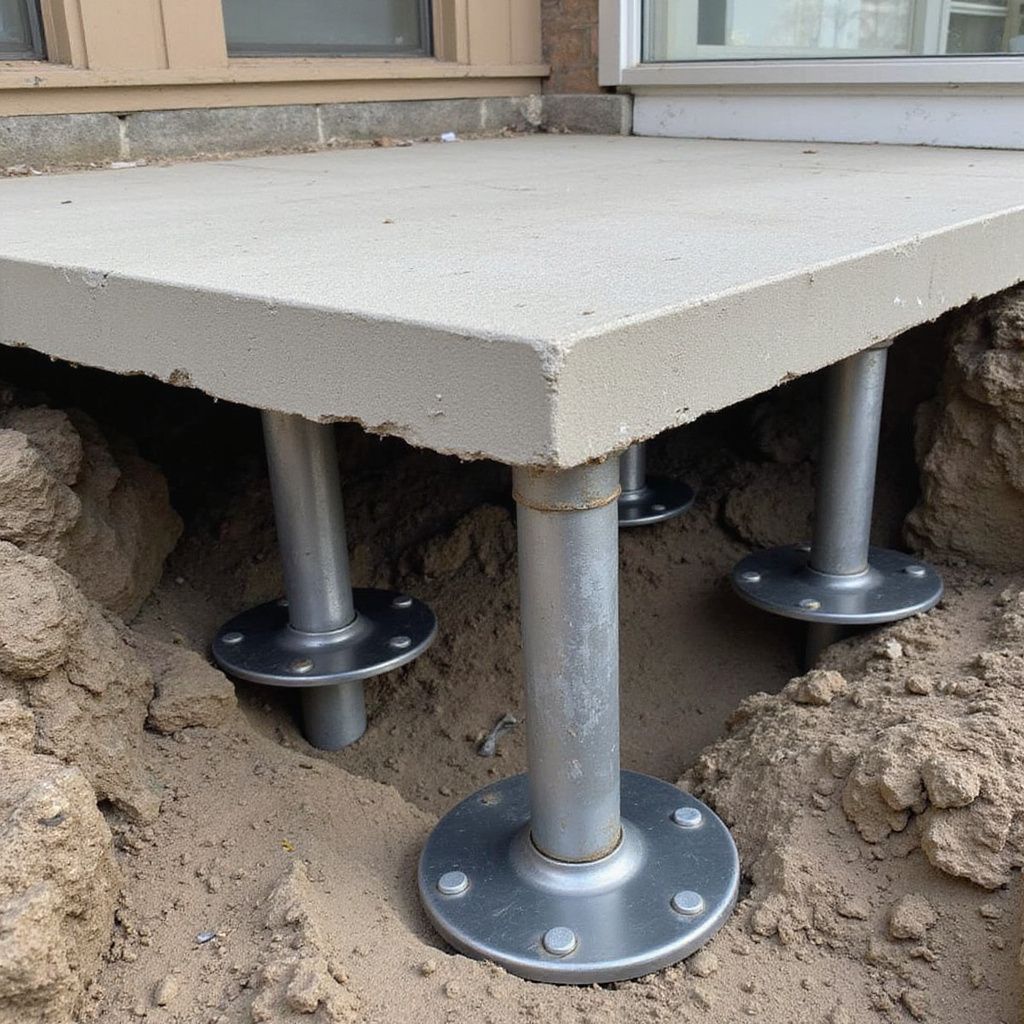
Helical piers function like
large steel screws that are mechanically “twisted” into the soil using high-torque machinery. Once installed to the desired depth and resistance, they provide a solid footing on which the foundation can be lifted or stabilized.
Key Features:
- Threaded helix plates provide torque-based anchoring
- No large excavations required
- Work well for
porches, additions, and light structures
- Great for
shallow, shifting, or fill soils
- Immediate load-bearing capacity
Advantages:
- Faster installation
- No concrete curing time
- Perfect for tight-access or urban lots
- No vibration or hammering
- Clean, low-noise process
Crawl Space Jack Posts (SmartJacks®)
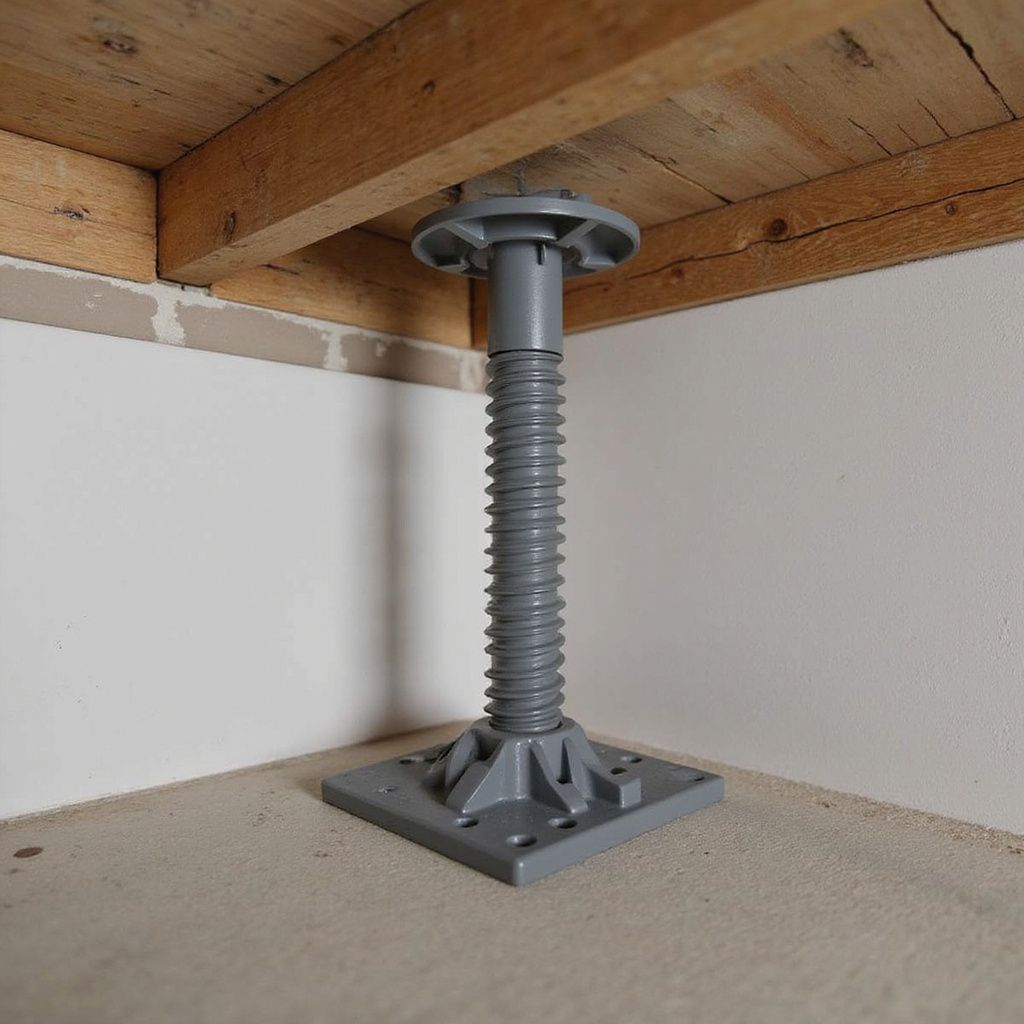
For homes with crawlspaces showing signs of sagging or sloping floors, we install adjustable steel support posts beneath girders and beams to stabilize and lift interior floors.
These are often paired with drainage or encapsulation for full crawl space restoration.
Choosing the Right System: Push vs. Helical
| Feature | Push Piers | Helical Piers |
|---|---|---|
| Load Capacity | High – Great for heavy homes | Moderate – Ideal for lighter loads |
| Installation | Driven hydraulically | Screwed into soil (torque-driven) |
| Soil Suitability | Works in deeper, unstable soils | Best in soft soils, fill, or shallow depth |
| Vibration / Noise | Low, but some force applied | Very quiet, no vibration |
| Ideal Use Cases | Large homes, deep cracks, severe settlement | Porches, garages, additions |
Our Piering & Lifting Process
We handle every step in-house. No subs, no guesswork—just expert execution.
01
Step 1: Inspection & Evaluation
We use laser levels, resistance testing, and visual inspection to determine lift zones and pier layout.
02
Step 2: Engineering Review
Our team calculates depth, spacing, and type of pier required for safe, long-term results.
03
Step 3: Installation
Piers are driven or twisted into place, bracketed to the foundation, and hydraulically lifted with real-time measurements.
04
Step 4: Lock-Off & Final Grading
Once stable, the structure is secured and backfilled, and soil is compacted and leveled.
05
Step 5: Documentation & Warranty
You receive a final report, before/after photos, and a transferable warranty for added home resale value.
FAQs: Piering & Underpinning
How long does it take?
Most piering jobs take 2–5 days, depending on the number of piers and access conditions.
Will the home be completely level again?
We lift as much as safely possible without causing additional damage (e.g., to plumbing or framing). Often, 90–100% leveling is achievable.
Is this solution permanent?
Yes. These systems are designed to last the lifetime of the structure and are backed by industry-leading warranties.
Can I stay in my home during installation?
Yes—work is mostly external, and interior disruption is minimal.
What’s the cost?
Piering jobs typically range from $6,000–$30,000 depending on structure size, depth, and pier type. We offer financing and phased options.
Get Your Home Back on Solid Ground—Permanently
Foundation issues don’t fix themselves—and they only get more expensive over time. Let ABI Corporation help you: