
Basement Wall Stabilization Throughout the Kansas City Metro
Stop Structural Movement. Reinforce with Confidence.
When Your Foundation Walls Start to Shift, We Stabilize Them for Good
Basement walls are built to hold back tons of soil—but when that soil becomes unstable, saturated with water, or pushes laterally over time, even concrete and block walls can’t hold up forever. That’s when cracks form, walls bow inward, and structural risk increases fast.
At ABI Corporation, we’ve helped
thousands of homeowners in the Kansas City area stabilize their foundation walls before the damage becomes catastrophic. Using engineered systems like
I-beam bracing,
carbon fiber reinforcement, and
wall anchors, we stop further movement, restore safety, and preserve the long-term value of your home.
What Is Wall Stabilization?
Wall stabilization is the process of reinforcing basement or foundation walls to prevent them from moving, bowing, or collapsing due to external pressure.
Unlike full foundation replacement, stabilization is a
non-invasive, permanent solution that restores safety without tearing out walls or disrupting your home.
Why Do Basement Walls Need Stabilization?
In the Kansas City metro, wall failure is often caused by:
- Expansive clay soil that swells with rain and shrinks in drought
- Hydrostatic pressure from poor drainage or high water tables
- Frost heave in winter that moves the foundation
- Improper backfill or poor original construction
- Tree roots or nearby concrete slabs pressing on the wall
These factors apply even to newer homes. Stabilization doesn’t just fix problems—it
prevents costly repairs down the road.
Warning Signs That Your Walls Are Unstable
If you notice any of the following, your basement walls may need immediate stabilization:
Horizontal cracks (especially mid-wall)
Diagonal or stair-step cracks in block walls
Inward bowing or bulging walls
Doors or windows sticking
Musty smells or moisture near walls
Gaps between floor and wall or ceiling and wall
Tilted window frames or shifting trim
Our Wall Stabilization Systems
ABI offers
three proven stabilization methods, each customized based on wall type, movement severity, and basement condition.
Steel I-Beam Bracing
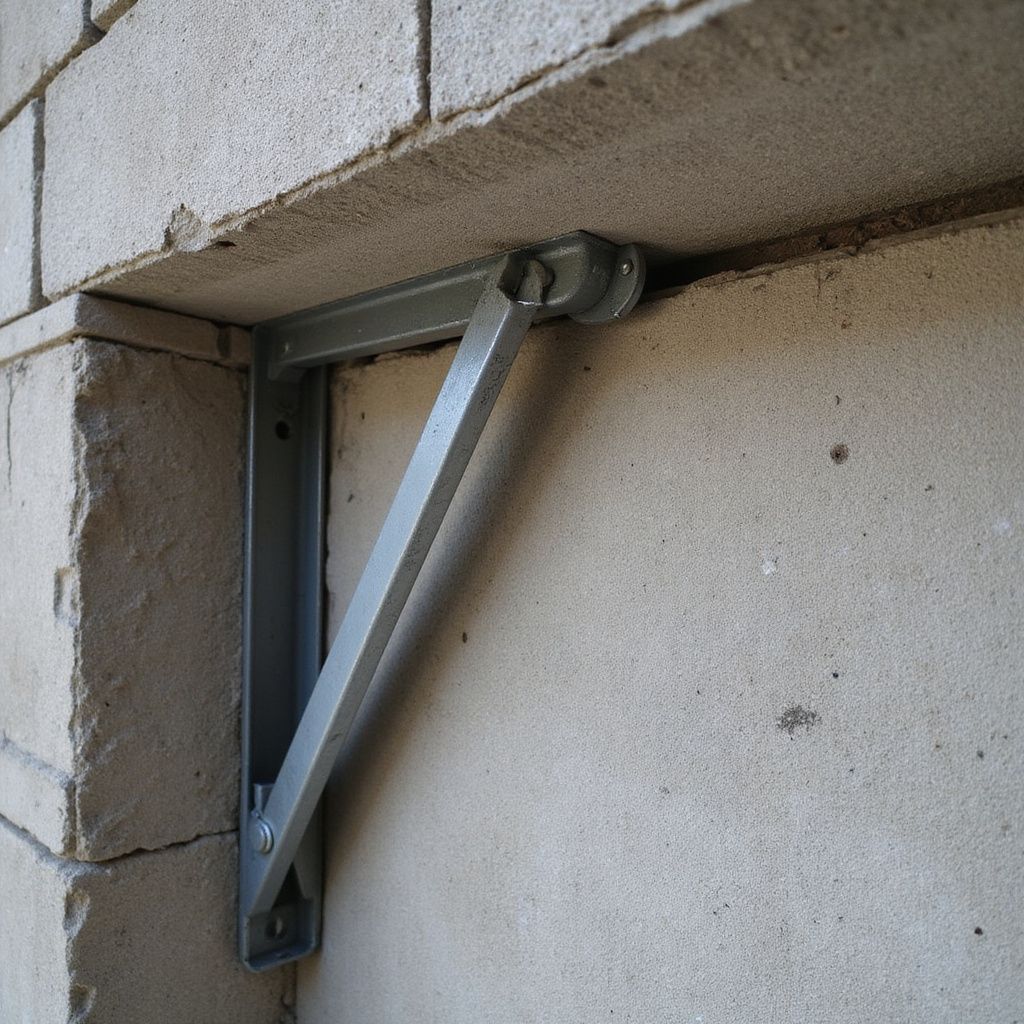
I-beams are vertical steel supports installed along the interior of your bowing wall. Secured to both the foundation floor and floor joists, they stop inward movement instantly and are ideal when exterior excavation isn’t possible.
Ideal for:
- Finished basements
- Severe bowing (2”–4” of deflection)
- Limited access outside
- Block or poured concrete walls
Advantages:
- No digging required
- Permanent stabilization
- Can be painted to blend with walls
- Low maintenance
Ideal for:
- Early-stage or minor bowing (<2”)
- Cosmetic concerns (low profile)
- Finished basements
- Homeowners who want a clean look
Advantages:
- Nearly invisible once painted
- Fast installation (often in one day)
- Strong, long-lasting reinforcement
- No digging or framing disruption
Carbon Fiber Wall Straps
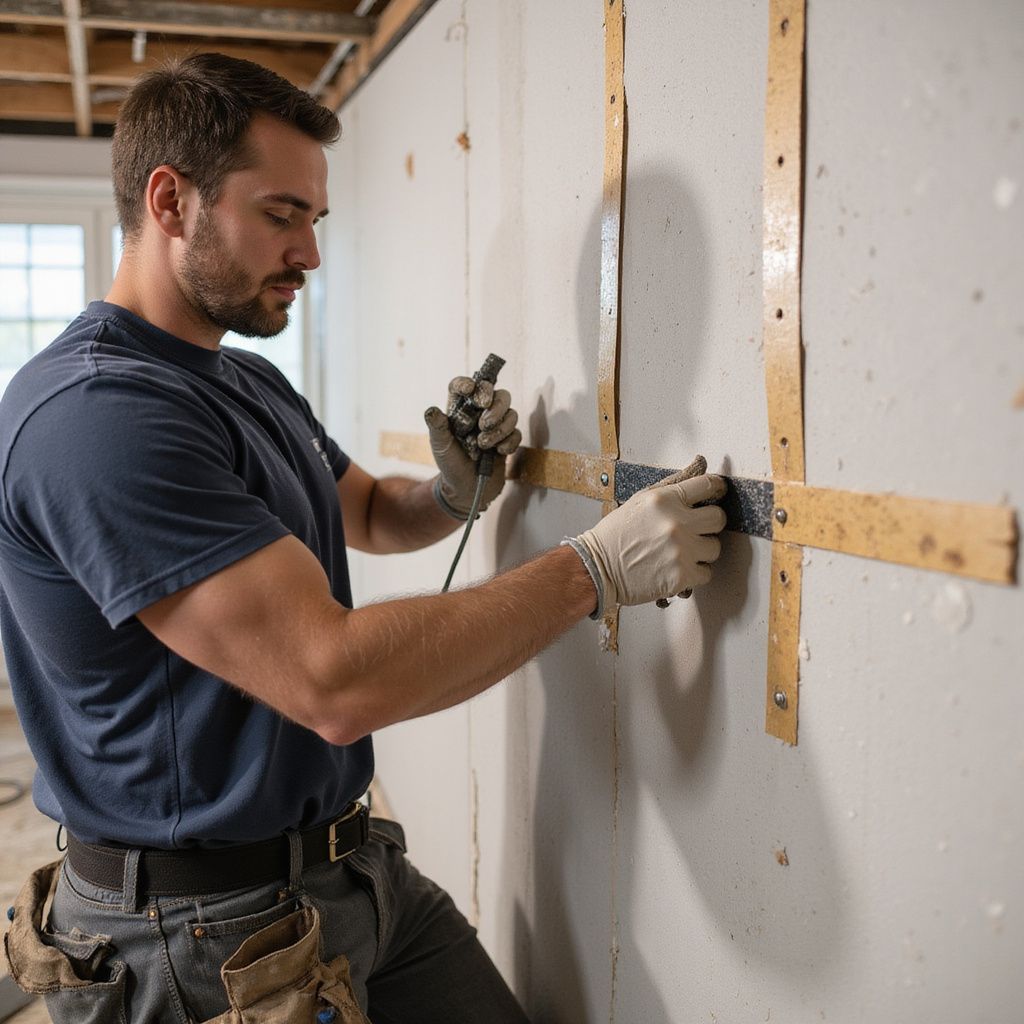
Stronger than steel and thinner than a coin, carbon fiber straps are bonded with epoxy directly to the surface of foundation walls. They distribute lateral pressure evenly and prevent further bowing.
Ideal for:
- Severe movement or tilt
- Homes with ample yard space
- Long-term wall straightening
Advantages:
- Potential to straighten wall over time
- Minimal impact on interior
- High strength
- Cost-effective for major movement
Wall Anchor Systems
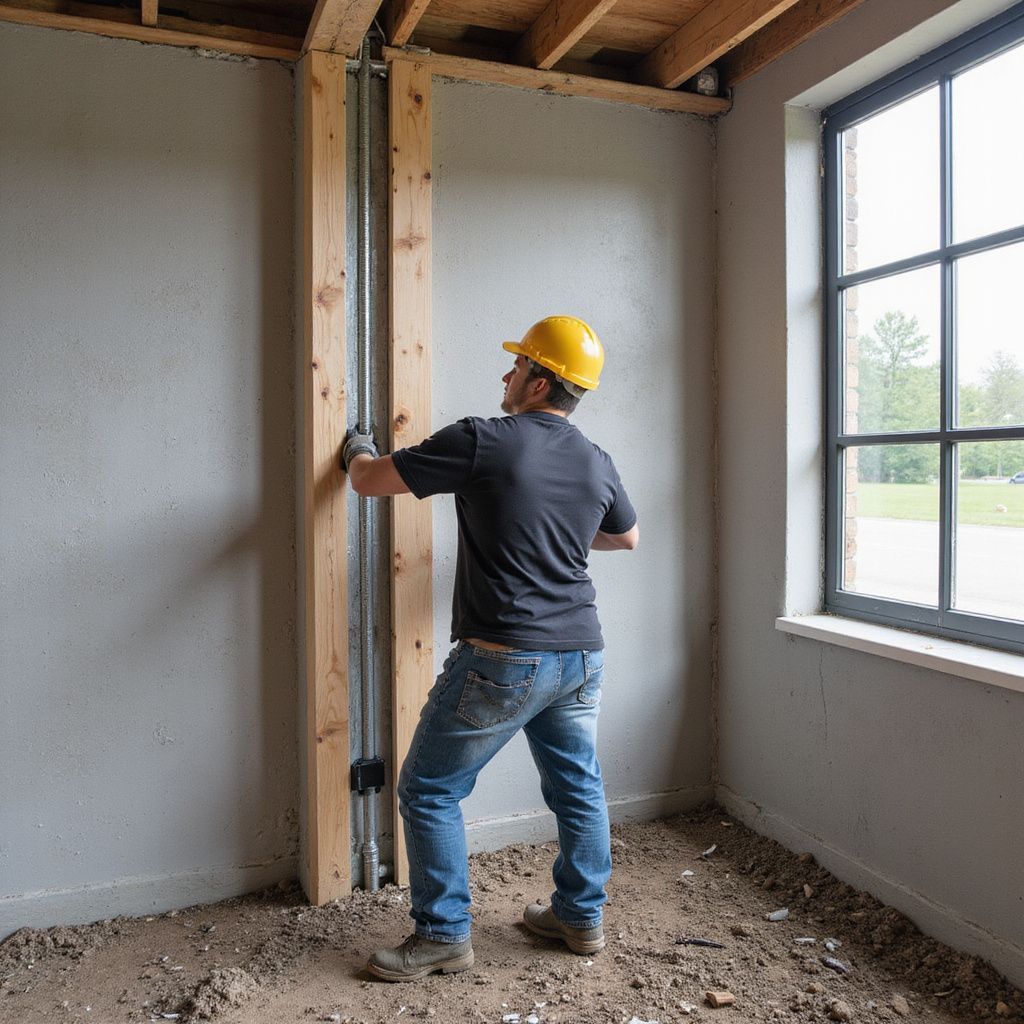
Wall anchors involve placing a steel plate inside your basement and anchoring it to a large steel plate buried outside. A threaded steel rod connects the two, pulling the wall back and resisting soil pressure.
Our Stabilization Process
Here’s what to expect when ABI is on the job:
01
Step 1: Free Inspection
We check for wall deflection, movement, crack severity, and signs of moisture.
02
Step 2: Custom Plan
You receive a written proposal with a
clear explanation of your wall’s condition and our recommended solution—nothing more, nothing less.
03
Step 3: Clean Installation
Our local crews install the chosen system with minimal disruption to your home or landscaping.
04
Step 4: Final Walkthrough & Warranty
We show you exactly what we did and provide warranty options so you can feel confident in the repair.
FAQs About Basement Wall Stabilization
Is this a permanent fix?
Yes. Our stabilization systems are designed to last the life of your home and come with long-term warranties.
How do I know if I need stabilization or repair?
If the wall is moving but hasn’t failed, stabilization is typically the best option. We’ll explain which option is right for you.
Will it affect my finished basement?
We work carefully in finished spaces and use systems like carbon fiber and I-beams that minimize disruption.
Do you excavate my yard?
Only wall anchors require exterior digging. I-beams and carbon fiber are installed entirely inside.
What does it cost?
Stabilization costs vary depending on system, length of wall, and severity. Most projects range from $2,000 to $8,000. We provide written estimates with no pressure.
Don’t Let the Problem Get Worse — Stabilize It Now
Waiting on a bowing or cracking wall only leads to bigger problems—and more expensive solutions. With ABI Corporation, you can
stabilize your foundation walls quickly and permanently, backed by five decades of experience.